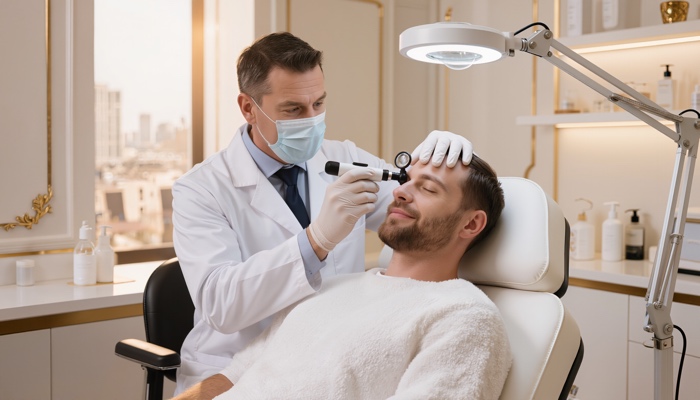
Why Hair Loss Happens — Understanding the Cause Changes Everything
Before any treatment can be chosen effectively the underlying cause of hair loss needs to be identified. This is the step that gets skipped most often when people pursue over-the-counter solutions or unqualified providers — and it is the reason those approaches so frequently disappoint.
The Most Common Types of Hair Loss
Hair loss is not one condition — it is many. The most common include:
- Androgenetic alopecia — also called male or female pattern hair loss — is by far the most common type. It is driven by genetics and the hormone DHT which progressively miniaturizes hair follicles. In men it typically produces a receding hairline and thinning crown. In women it usually presents as diffuse thinning across the top of the scalp with the part widening over time.
- Telogen effluvium — sudden widespread shedding triggered by physical or emotional stress, illness, surgery, significant weight loss, hormonal changes including postpartum, or nutritional deficiencies. This type is often temporary and resolves once the trigger is addressed.
- Alopecia areata — an autoimmune condition where the immune system attacks hair follicles causing patchy loss. Can range from small coin-sized patches to complete scalp or body hair loss.
- Traction alopecia — caused by chronic tension on hair from tight hairstyles, extensions, or weaves. Often reversible if caught early.
- Nutritional deficiency related loss — iron deficiency, low ferritin, vitamin D deficiency, and zinc deficiency are all associated with increased hair shedding.
- Thyroid and hormonal causes — both hypothyroidism and hyperthyroidism can cause significant hair loss, as can hormonal imbalances related to PCOS and perimenopause.
Hair Restoration in Fairfax VA — What the Evidence Says
Here is an honest look at the main treatment options available for hair restoration and what the clinical evidence actually supports for each.
PRP — Platelet-Rich Plasma Therapy
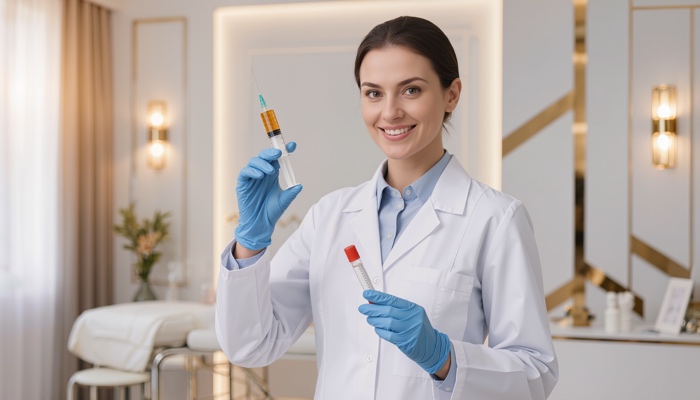
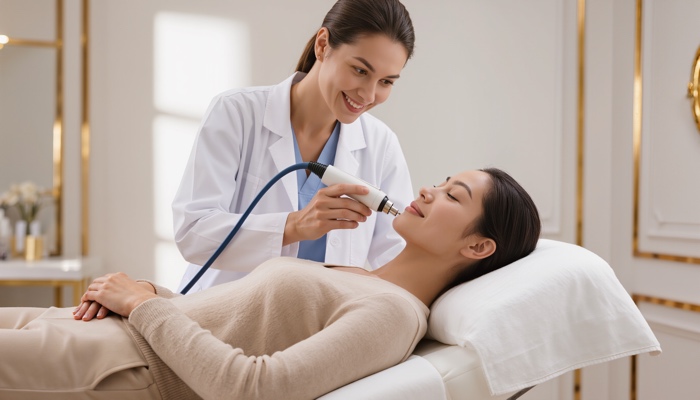
PRP has become one of the most well-supported non-surgical hair restoration treatments available and is a significant part of what we offer at The Holistic Glow in Fairfax. The treatment involves drawing a small amount of your own blood, concentrating the growth factor-rich platelets through centrifuge processing, and injecting the resulting solution directly into the scalp at the level of the hair follicles.
Those growth factors — including platelet-derived growth factor, vascular endothelial growth factor, and insulin-like growth factor — stimulate dormant follicles back into an active growth phase and strengthen existing thinning follicles from within.
What the evidence shows: Multiple peer-reviewed studies have demonstrated significant improvement in hair density, thickness, and the number of hairs in the active growth phase following a course of PRP treatment. Results are most pronounced in patients with early to moderate androgenetic alopecia where follicles are still present but weakened.
Best candidates:
- Early to moderate male or female pattern hair loss
- Women experiencing diffuse thinning
- Patients who want to avoid medication side effects
- As a complement to other treatments including minoxidil or post-transplant recovery
Realistic expectations: Most patients notice reduced shedding after the second or third session. Visible density improvement typically becomes apparent three to six months after starting treatment. A full initial course of three to four sessions spaced four to six weeks apart is standard, followed by maintenance every six to twelve months.
Minoxidil — The Most Accessible Starting Point
Minoxidil is the only topical hair loss treatment approved by the FDA and it has been around long enough to have an extensive evidence base. It works by widening blood vessels around hair follicles improving circulation and extending the active growth phase of the hair cycle.
Available as a topical solution or foam and more recently as an oral low-dose formulation oral minoxidil has gained significant attention in recent years for its ease of use and strong results in both men and women. Studies have shown oral minoxidil at low doses to be highly effective with a side effect profile that is very manageable for most patients.
Who it works best for: Androgenetic alopecia in both men and women. Works better when started early before significant follicle miniaturization has occurred.
Important to know: Minoxidil requires consistent daily use to maintain results. Stopping the medication typically leads to the return of shedding within three to six months. It is a maintenance treatment not a cure — but for many patients it is an extremely effective long-term strategy.
Finasteride and Dutasteride
Finasteride is an oral prescription medication for men with androgenetic alopecia that works by blocking the conversion of testosterone to DHT — the hormone responsible for follicle miniaturization in pattern hair loss. It is FDA-approved for male hair loss and has decades of strong clinical evidence behind it.
Dutasteride is a related medication that blocks more DHT and is sometimes used off-label for hair loss in men who do not respond adequately to finasteride.
Important note for women: Finasteride and dutasteride are generally not recommended for women of childbearing age due to the risk of birth defects. Postmenopausal women may be candidates in certain circumstances — this is always discussed carefully during your consultation.
Nutritional and Lifestyle Interventions
For hair loss driven by nutritional deficiencies — which is more common than most people realize — targeted supplementation and dietary changes can produce significant improvement. Key nutrients that support hair health include:
- Iron and ferritin — Low ferritin even within the normal lab range is associated with increased hair shedding. Optimal ferritin for hair health is generally considered to be above 70 ng/mL
- Vitamin D — Deficiency is strongly associated with hair loss and is extremely common in Northern Virginia particularly through winter months
- Zinc — Plays a direct role in hair follicle function and protein synthesis
- Biotin — Only clinically beneficial if you have an actual biotin deficiency — common in people taking certain medications
- Protein intake — Inadequate protein consumption is an underrecognized cause of diffuse hair thinning
Comparing Hair Restoration Options — An Honest Summary
| Treatment | Best For | Effectiveness | Commitment | Side Effects |
|---|---|---|---|---|
| PRP therapy | Pattern loss — early to moderate | High | 3 to 4 sessions then maintenance | Minimal — mild scalp tenderness |
| Topical minoxidil | Pattern loss — men and women | High | Daily — ongoing | Scalp irritation in some |
| Oral minoxidil | Pattern loss — especially women | High | Daily — ongoing | Facial hair growth in some women |
| Finasteride | Male pattern loss | High | Daily — ongoing | Rare sexual side effects |
| PRP + minoxidil | Pattern loss — combined approach | Very High | Combined commitment | Minimal combined |
| Nutritional intervention | Deficiency-related loss | Variable | Ongoing supplements | None significant |
| Hair transplant | Advanced loss with stable pattern | High | Single surgical procedure | Surgical risks and recovery |
What to Expect at Your Hair Restoration Consultation in Fairfax VA
Walking into your first hair restoration consultation knowing what to expect makes the experience far less daunting. At The Holistic Glow our consultations are genuinely thorough because we believe the quality of your results depends entirely on the quality of your diagnosis.
Your First Appointment Will Include
- Detailed health and hair loss history — When did you first notice changes, how has it progressed, what treatments have you already tried, family history of hair loss, recent life events including stress, illness, or major changes
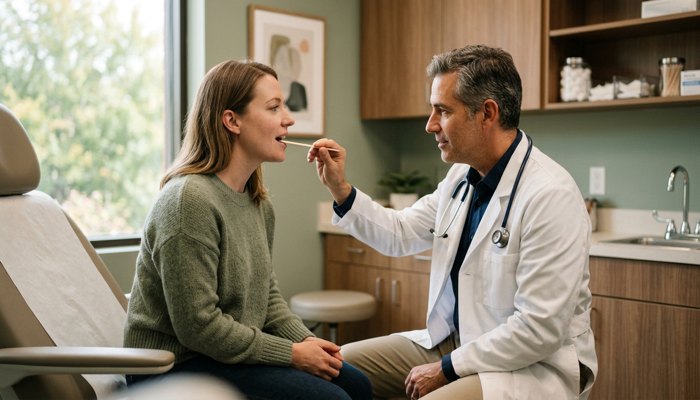
- Scalp assessment — Visual examination of the scalp and hair to identify the pattern type and severity of loss
- Blood work review or order — Complete blood count, ferritin, thyroid function, vitamin D, zinc, and hormonal panels where relevant — to rule out treatable underlying causes
- Honest treatment discussion — We will tell you what we genuinely believe will work for your situation, what realistic results look like, and what timeline to expect
- Personalized treatment plan — A written plan tailored to your type of hair loss, budget, timeline, and preferences
Hair Restoration Fairfax VA — Who Is the Right Candidate?
Not everyone experiencing hair loss will benefit equally from the same treatment — and an honest provider will tell you that upfront. You are likely a strong candidate for hair restoration treatment if you:
- Are experiencing early to moderate pattern hair loss with follicles still present
- Have had hair loss for fewer than five years
- Are in good general health
- Have realistic expectations about the pace and degree of results
- Are committed to the treatment schedule required — whether that is ongoing medication or regular PRP sessions
Hair restoration treatment is less likely to produce significant results if:
- Hair loss has been present for many years with extensive follicle loss
- The scalp in the affected area is completely smooth with no visible follicles
- The underlying cause has not been properly identified and addressed
Frequently Asked Questions About Hair Restoration
This depends on the treatment but patience is genuinely required for all hair restoration approaches. With PRP most patients notice reduced shedding after the second or third session — typically six to twelve weeks into treatment — and visible density improvement usually becomes apparent at the three to six month mark as new hair grows through. Minoxidil typically shows noticeable results at four to six months of consistent use. Hair restoration is a gradual biological process — not an overnight transformation. We always set realistic timelines during consultations so patients know exactly what to expect and when.
Many treatments work well for both sexes but some important differences apply. Minoxidil is FDA-approved and effective for both men and women though dosing differs. PRP therapy works equally well for men and women with pattern hair loss. Finasteride and dutasteride are generally not recommended for women of childbearing age. Low-dose oral minoxidil has become increasingly popular for women specifically and shows excellent results with a manageable side effect profile. At The Holistic Glow we see a significant number of women with hair thinning and tailor the treatment plan carefully to each patient’s hormonal profile, health history, and goals.
In most cases hair restoration treatments are considered cosmetic and are not covered by health insurance. This includes PRP therapy and most aesthetic procedures. However prescription medications like finasteride and minoxidil may be covered depending on your insurance plan and the diagnosis on file. Blood work to diagnose the underlying cause of hair loss is typically covered as it is considered medically necessary diagnostic testing. Our team can help clarify what your specific plan covers and we are transparent about pricing for all treatments during your consultation.
It depends on the degree of follicle loss. Hair restoration treatments like PRP and minoxidil work by stimulating existing follicles — if a follicle is completely gone it cannot be revived through these methods. However many people who have been losing hair for years still have significant numbers of weakened or dormant follicles that are very much treatable. A scalp assessment and thorough consultation will give you an honest picture of what treatment can realistically achieve for your specific situation. In some cases where follicle loss is advanced a hair transplant consultation may also be worth discussing. We will always give you an honest assessment of your options.
Ready to Start Your Hair Restoration Journey in Fairfax VA?
Hair loss is personal — and so is the solution. At The Holistic Glow at Pioneer Medical Associates we start with an accurate diagnosis and build a treatment plan around your specific type of hair loss your lifestyle and your goals.
No generic protocols. No miracle promises. Just honest physician-supervised hair restoration care for patients across Fairfax McLean Vienna Reston Tysons Corner and Northern Virginia.
Schedule Your Medicare Wellness Visit Fairfax VA Today
Pioneer Medical Associates
8316 Arlington Boulevard, Suite 630, Fairfax, VA 22031
(703) 344-1172
Call today or book online to schedule your Botox consultation and take the first step toward refreshed, natural-looking results.